
Triple Agonists: One System, Three Pathways
Triple agonists are research peptides designed to engage the GLP-1, GIP and glucagon receptors simultaneously.

A receptor agonist is a molecule that binds and activates a receptor.
Triple agonists are engineered to activate three receptors — GLP-1, GIP and glucagon — at once.
They are studied to understand how coordinated multi-receptor signalling behaves.
Educational graphics
What is an agonist?
An agonist is a molecule that binds a receptor and switches it on, mimicking the natural signalling molecule. A triple agonist is designed to do this at three receptors simultaneously.
Three pathways, one molecule
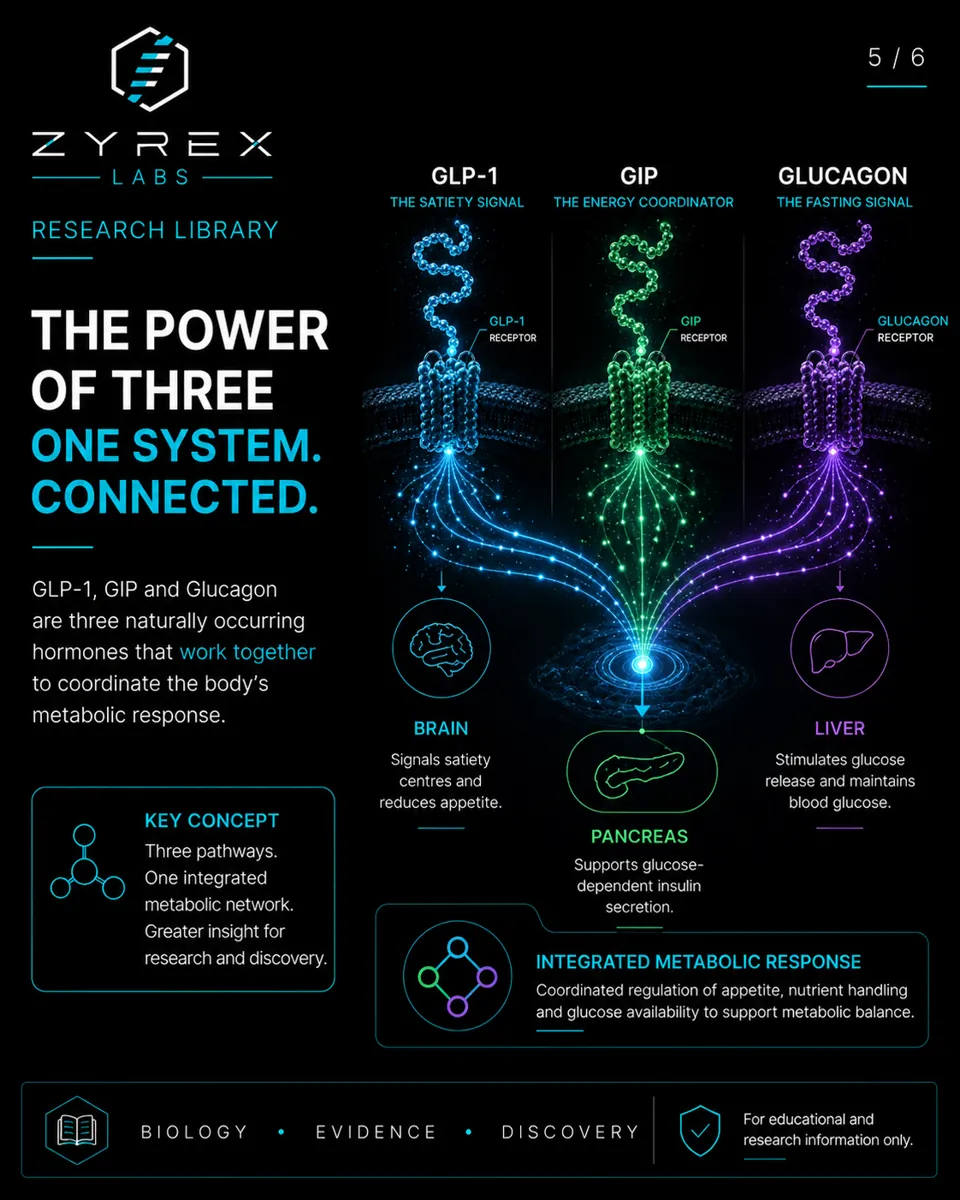
GLP-1, GIP and glucagon each act through their own receptor. A triple agonist combines features of all three natural signals into a single engineered peptide, allowing researchers to study what happens when all three pathways are engaged together.
An integrated metabolic response
The three hormones normally act at different times — the incretins after meals, glucagon during fasting. Bringing them together in one molecule is a way to probe the integrated metabolic network as a single system.
Retatrutide is the compound most associated with this triple-receptor research approach.
Scientific diagrams
Frequently asked questions
What is a triple receptor agonist?+
A single engineered peptide designed to bind and activate three receptors — GLP-1, GIP and glucagon — at the same time.
Which compound is studied as a triple agonist?+
Retatrutide is the compound most frequently associated with triple-receptor research.
Related topics
For laboratory research use only. Not for human or animal consumption.
Continue learning
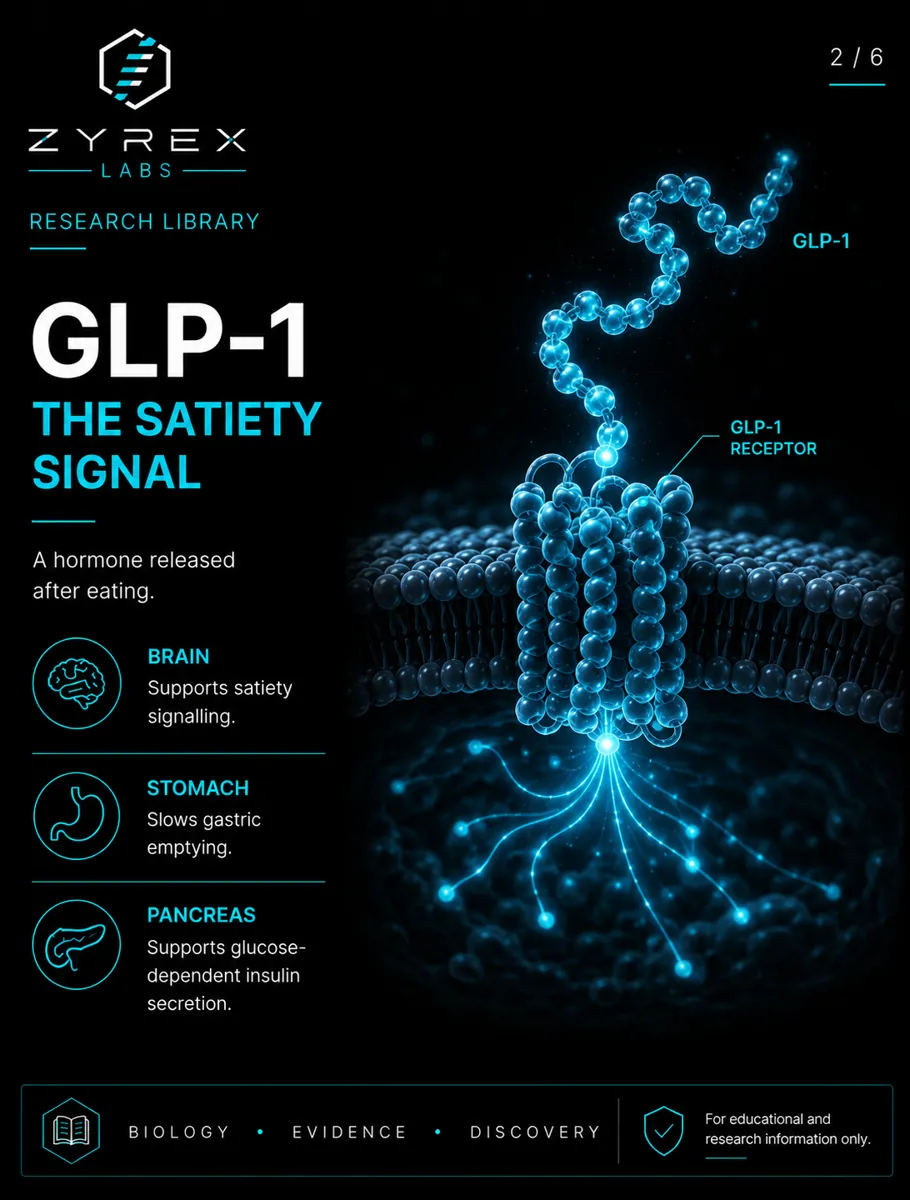
GLP-1: The Satiety Signal
GLP-1 is an incretin hormone released after eating that engages a receptor system central to appetite and glucose-dependent signalling.
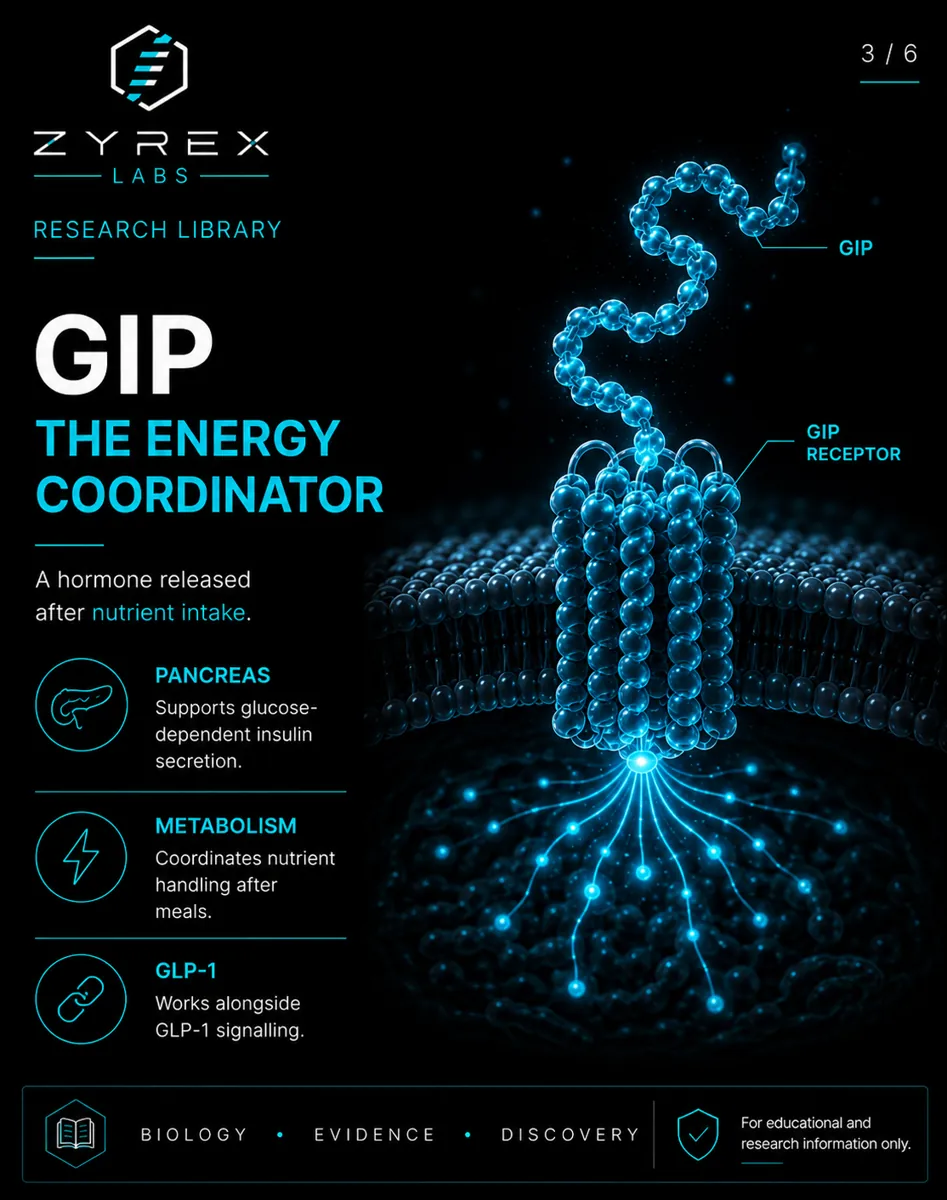
GIP: The Energy Coordinator
GIP is an incretin hormone released after nutrient intake that works alongside GLP-1 to coordinate the body's metabolic response.
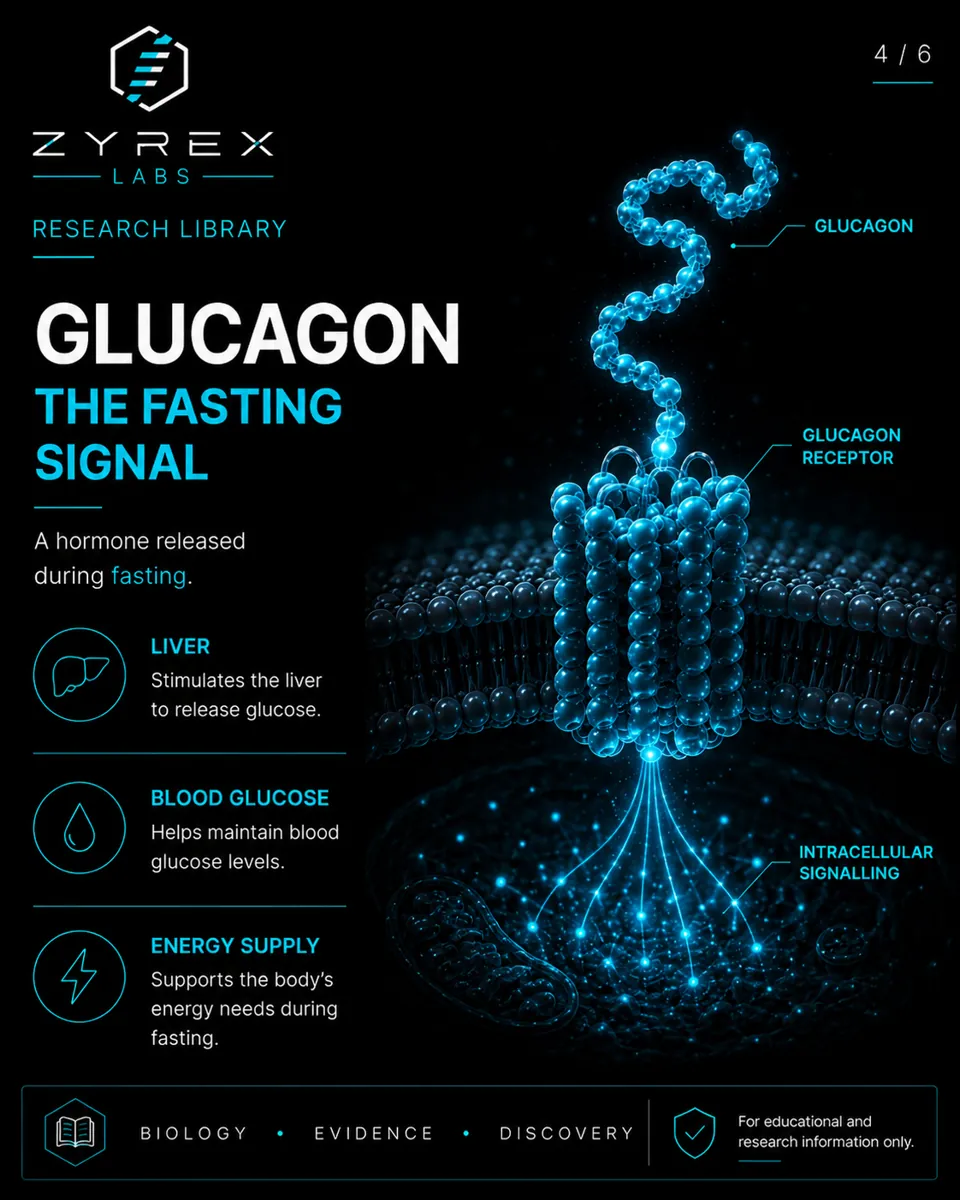
Glucagon: The Fasting Signal
Glucagon is a hormone released during fasting that signals the liver and helps maintain blood glucose availability.
Retatrutide
A triple receptor agonist studied for its simultaneous interaction with the GLP-1, GIP and glucagon receptor pathways.
Research categories
Featured guides
L-Carnitine: The Carnitine Shuttle
L-Carnitine is a molecule central to the carnitine shuttle, the system that transports long-chain fatty acids into the mitochondria for beta-oxidation.
Cellular Energy: How Cells Power Themselves
An overview of how cells generate, carry and regulate energy — the topic cluster that connects NAD+, the carnitine shuttle and mitochondrial-derived peptides.
Mitochondrial Biology
The mitochondria are the cell's energy centres and a hub of signalling research — connecting MOTS-c, NAD+ and the carnitine shuttle.