
What Is Retatrutide?
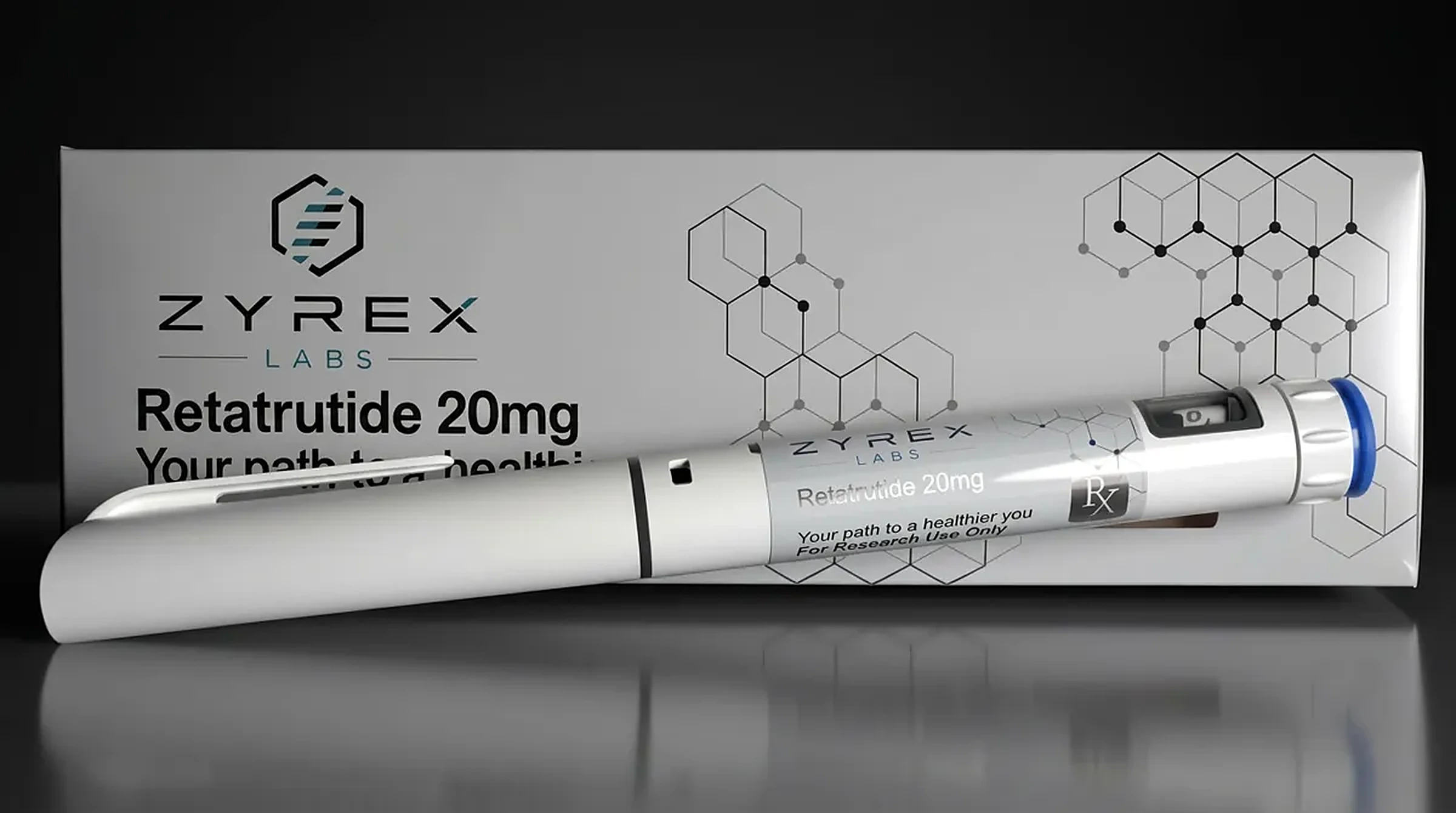
Related Product
Retatrutide
Research peptide · 20mg
Retatrutide is a synthetic peptide studied within the incretin and metabolic research field. It is described in the scientific literature as a triple receptor agonist, meaning it is engineered to interact with three distinct receptor systems at the same time.
Because it engages multiple signalling pathways simultaneously, Retatrutide has become a frequent subject of laboratory investigation into how these receptor systems function, overlap and interact within models of energy homeostasis.
Research Classification
- Compound Name
- Retatrutide
- Category
- Metabolic
- Research Area
- Incretin & metabolic receptor signalling
- Storage Conditions
- Store at 2–8°C, protected from light
Biological Pathways
- GLP-1 receptor pathway — a class B G-protein coupled receptor studied within incretin biology and glucose-dependent signalling.
- GIP receptor pathway — a second incretin receptor investigated for its role in nutrient and energy signalling.
- Glucagon receptor pathway — a receptor concentrated in hepatic tissue and studied in the context of energy metabolism.
- Convergent signalling — researchers examine how simultaneous engagement of all three receptors is integrated within energy-homeostasis models.
Mechanism Of Interest
Retatrutide is studied for its interaction with three receptors at once. The GLP-1 (glucagon-like peptide-1) receptor is a signalling target widely researched in the context of glucose regulation and incretin biology.
The GIP (glucose-dependent insulinotropic polypeptide) receptor is a second incretin pathway investigated for its role in nutrient and energy signalling.
The glucagon receptor is a third target studied for its part in energy metabolism and hepatic signalling.
Retatrutide has generated significant scientific interest precisely because it is engineered to interact with all three of these pathways simultaneously, allowing researchers to study the combined behaviour of these receptor systems in a single model.
Peptide engineering is central to its design: sequence modifications are studied for how they influence multi-receptor selectivity, potency and molecular stability.
Why Researchers Are Interested
- It provides a single research tool for examining three receptor pathways together rather than in isolation.
- Triple-agonist signalling is an emerging area of academic and pharmacological literature.
- Researchers study how simultaneous receptor engagement differs from single- or dual-receptor models.
- It is a reference compound for peptide-engineering and structure–function research.
Areas Of Ongoing Research
Storage Information
- Store lyophilised material at 2–8°C, protected from light and moisture.
- Once reconstituted, keep refrigerated and handle under standard laboratory conditions.
- Avoid repeated freeze–thaw cycles to preserve peptide integrity.
Frequently Asked Questions
What does triple receptor agonist mean?+
It describes a molecule engineered to interact with three different receptor systems. In the case of Retatrutide, these are the GLP-1, GIP and glucagon receptors.
Which receptors does Retatrutide interact with?+
The published literature describes interaction with the GLP-1 receptor, the GIP receptor and the glucagon receptor.
Why is multi-receptor pharmacology of interest?+
Studying several receptors together allows researchers to observe how the pathways integrate within energy-homeostasis models rather than examining each in isolation.
How should Retatrutide be stored in a laboratory?+
Lyophilised peptide is typically stored at 2–8°C, protected from light, with freeze–thaw cycles minimised.
References
Incretin hormones and multi-receptor agonism (review literature)
Peer-reviewed metabolic endocrinology reviews (PubMed-indexed)
GLP-1, GIP and glucagon receptor pharmacology
Published peptide pharmacology literature
Receptor sequence and structure records
UniProt / PubChem public databases
References point to reputable, publicly available scientific literature and databases for educational context. They are provided for background reading only.
For laboratory research use only. Not for human or animal consumption.
Related Product
Retatrutide
Research peptide · 20mg · Research use only