
Glucagon: The Fasting Signal
Glucagon is a hormone released during fasting that signals the liver and helps maintain blood glucose availability.
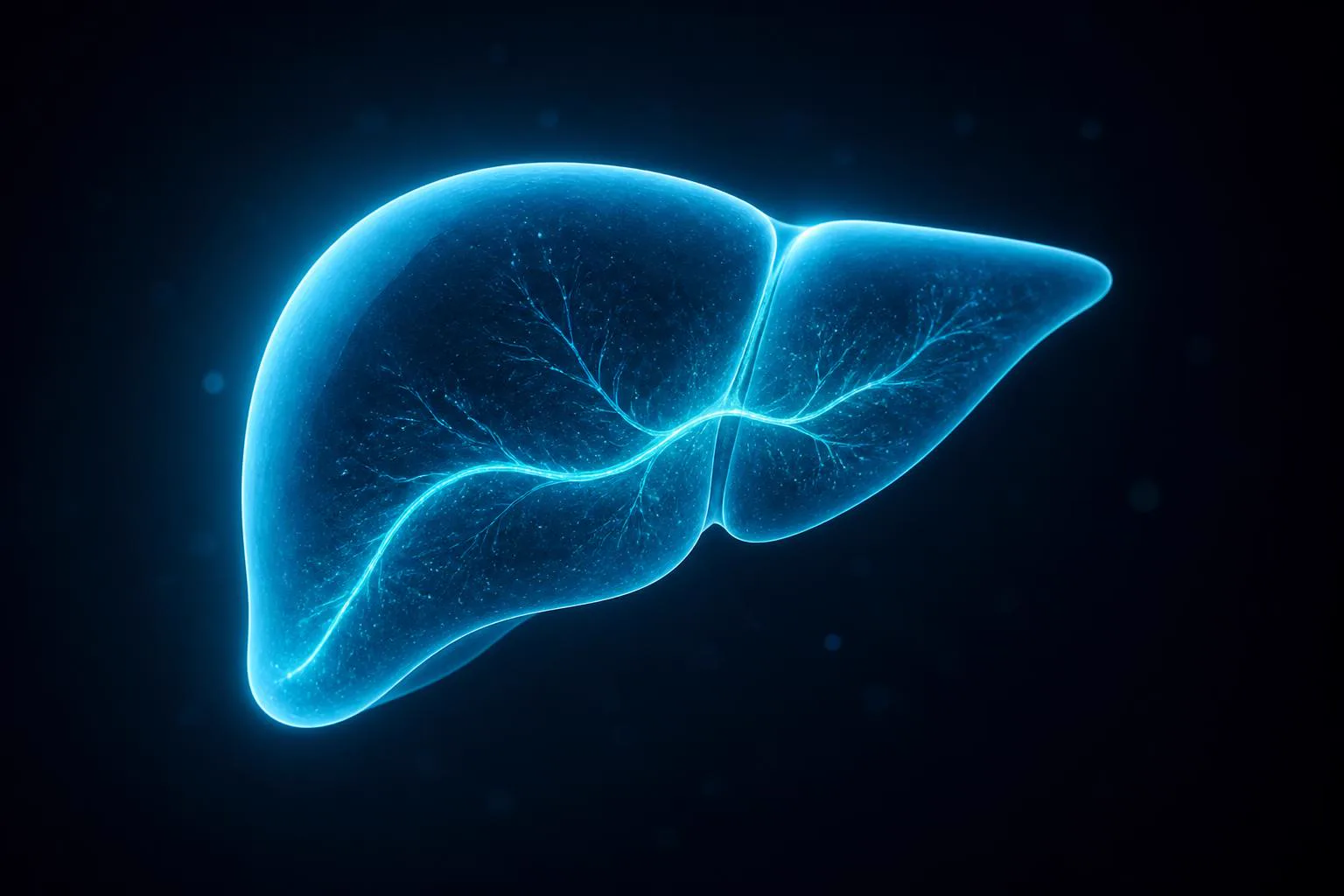
Glucagon is released during fasting, complementing the post-meal incretins.
It binds the glucagon receptor, prominently expressed in liver tissue.
It is studied for its role in maintaining blood glucose availability.
Educational graphics
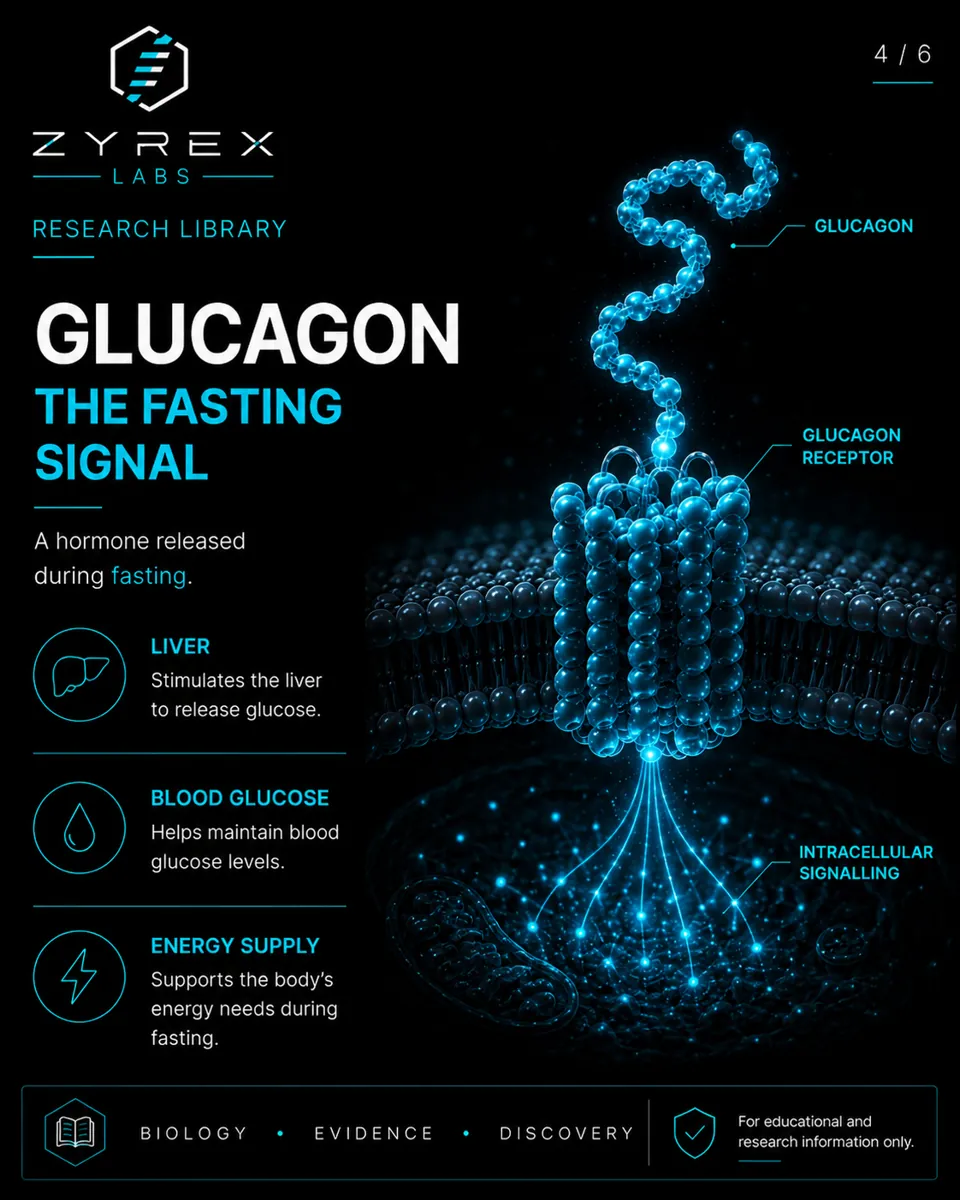
What is glucagon?
Glucagon is a peptide hormone released when nutrient intake is low. Where GLP-1 and GIP respond to feeding, glucagon responds to fasting — the two states are studied as complementary parts of one system.
The glucagon receptor
The glucagon receptor is a G-protein coupled receptor concentrated in the liver. When glucagon binds, it stimulates intracellular signalling studied in the context of hepatic glucose release.
Maintaining energy supply
By signalling the liver, glucagon participates in maintaining blood glucose during fasting. Its receptor is a third pathway of interest alongside GLP-1 and GIP in metabolic research.
Scientific diagrams
Frequently asked questions
When is glucagon released?+
Glucagon is released during fasting or low nutrient availability, complementing the post-meal incretin hormones.
Which tissue expresses the glucagon receptor?+
The glucagon receptor is prominently expressed in the liver.
Related topics
For laboratory research use only. Not for human or animal consumption.
Continue learning
GLP-1: The Satiety Signal
GLP-1 is an incretin hormone released after eating that engages a receptor system central to appetite and glucose-dependent signalling.
GIP: The Energy Coordinator
GIP is an incretin hormone released after nutrient intake that works alongside GLP-1 to coordinate the body's metabolic response.
Triple Agonists: One System, Three Pathways
Triple agonists are research peptides designed to engage the GLP-1, GIP and glucagon receptors simultaneously.
Retatrutide
A triple receptor agonist studied for its simultaneous interaction with the GLP-1, GIP and glucagon receptor pathways.
Research categories
Featured guides
L-Carnitine: The Carnitine Shuttle
L-Carnitine is a molecule central to the carnitine shuttle, the system that transports long-chain fatty acids into the mitochondria for beta-oxidation.
Cellular Energy: How Cells Power Themselves
An overview of how cells generate, carry and regulate energy — the topic cluster that connects NAD+, the carnitine shuttle and mitochondrial-derived peptides.
Mitochondrial Biology
The mitochondria are the cell's energy centres and a hub of signalling research — connecting MOTS-c, NAD+ and the carnitine shuttle.