
GLP-1: The Satiety Signal
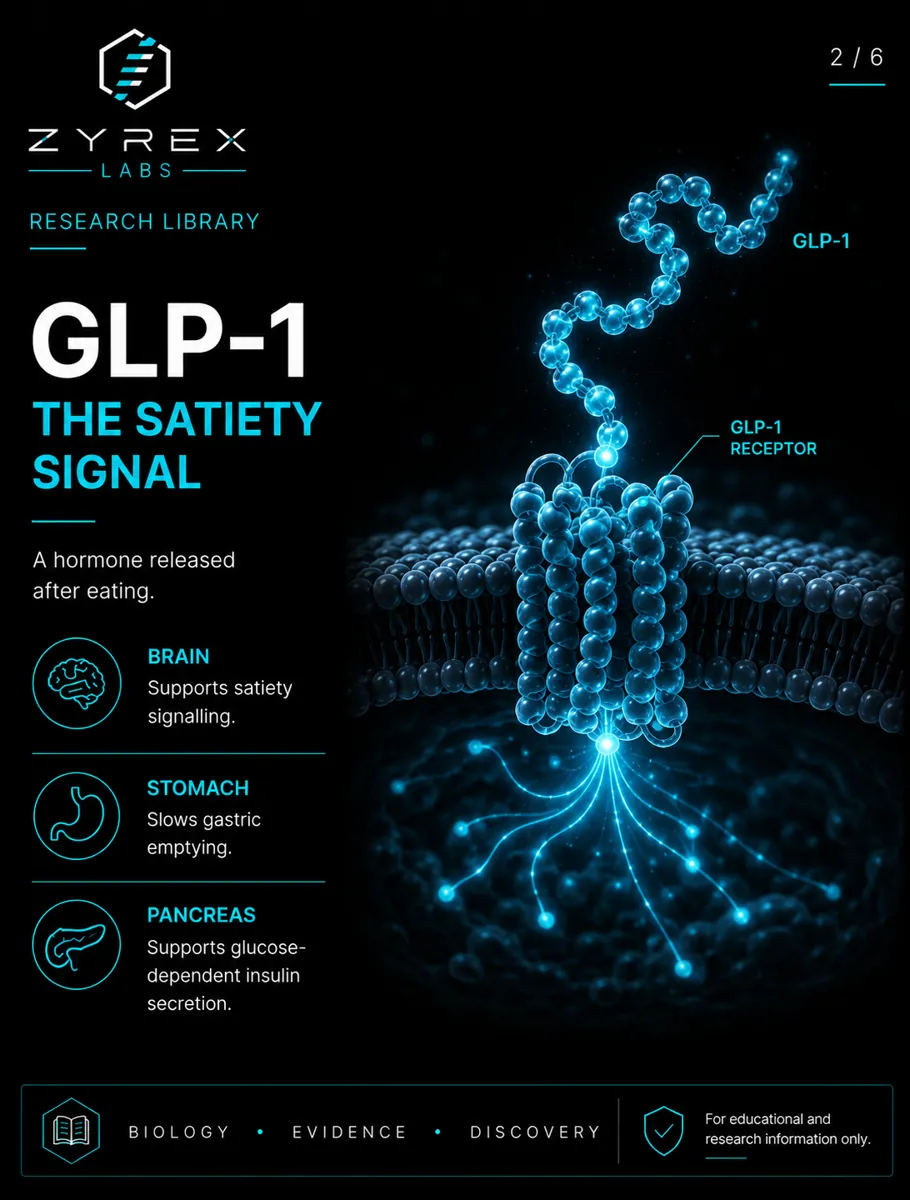
GLP-1 is an incretin hormone released after eating that engages a receptor system central to appetite and glucose-dependent signalling.
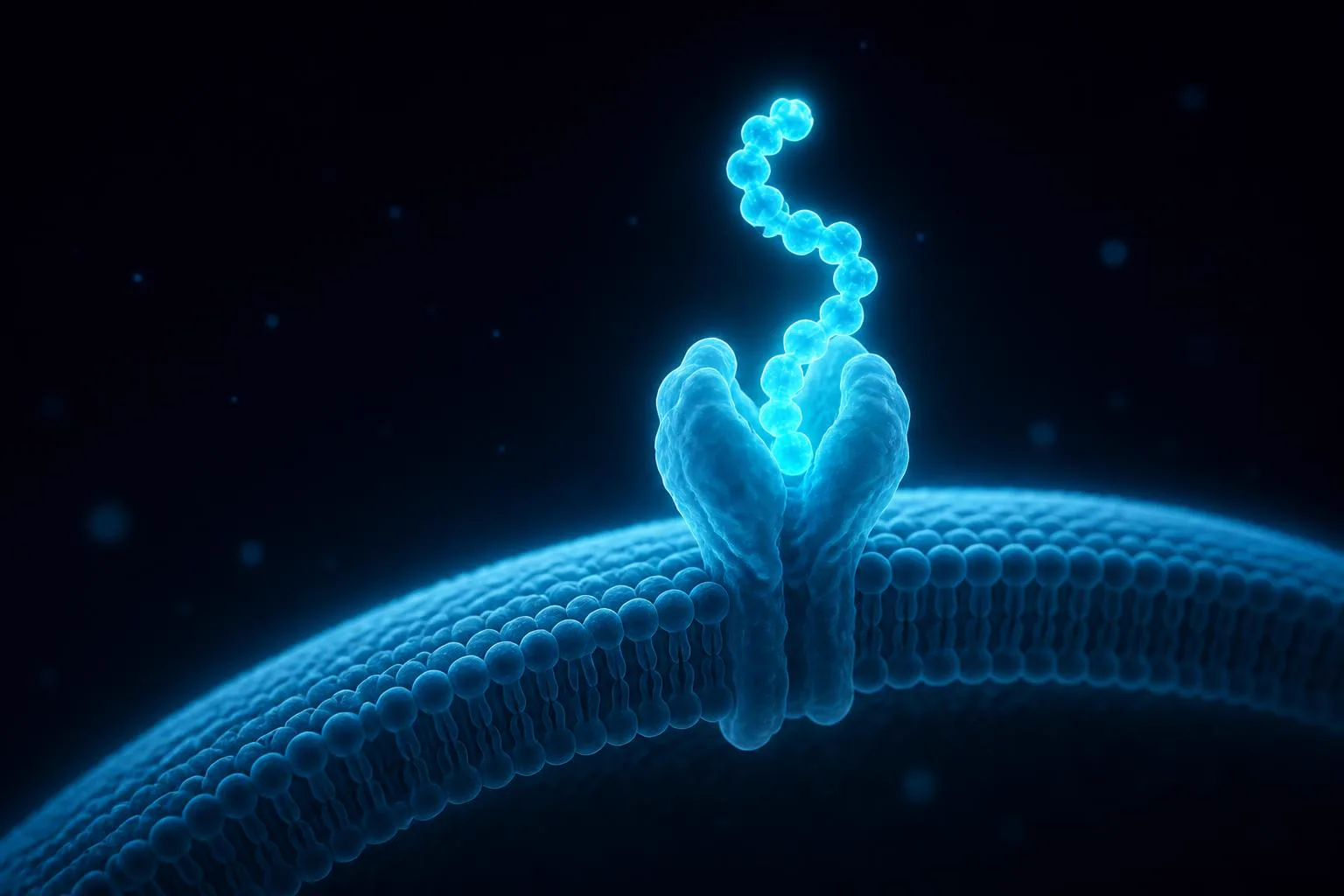
GLP-1 (glucagon-like peptide-1) is released from the gut after nutrient intake.
It binds the GLP-1 receptor, a G-protein coupled receptor found across several tissues.
It is studied for its role in satiety signalling and glucose-dependent insulin secretion.
Educational graphics
What is GLP-1?
GLP-1 is a short peptide hormone produced by specialised cells lining the intestine. It belongs to the incretin family — hormones released in response to food that help coordinate the body's metabolic response.
Because it is secreted after eating, GLP-1 is often described in the literature as a nutrient-sensing signal. It is a frequent subject of receptor biology research.
The GLP-1 receptor
GLP-1 acts by binding the GLP-1 receptor, a class B G-protein coupled receptor. When the peptide docks into the receptor, the receptor changes shape and triggers signalling inside the cell.
This receptor is expressed in the pancreas, brain and other tissues, which is why GLP-1 is studied across multiple systems at once.
Downstream signalling
Once activated, the receptor initiates a cascade of intracellular messengers. In pancreatic tissue this is studied in the context of glucose-dependent insulin secretion — a response that scales with glucose availability.
In the brain, GLP-1 receptor activity is studied in the context of satiety signalling and appetite regulation.
Scientific diagrams
Frequently asked questions
What does GLP-1 stand for?+
Glucagon-like peptide-1 — a peptide hormone named for its structural similarity to glucagon.
Where is GLP-1 produced?+
It is produced by enteroendocrine cells in the intestinal lining and released in response to nutrient intake.
Related topics
For laboratory research use only. Not for human or animal consumption.
Continue learning
GIP: The Energy Coordinator
GIP is an incretin hormone released after nutrient intake that works alongside GLP-1 to coordinate the body's metabolic response.
Glucagon: The Fasting Signal
Glucagon is a hormone released during fasting that signals the liver and helps maintain blood glucose availability.
Triple Agonists: One System, Three Pathways
Triple agonists are research peptides designed to engage the GLP-1, GIP and glucagon receptors simultaneously.
Retatrutide
A triple receptor agonist studied for its simultaneous interaction with the GLP-1, GIP and glucagon receptor pathways.
Research categories
Featured guides
L-Carnitine: The Carnitine Shuttle
L-Carnitine is a molecule central to the carnitine shuttle, the system that transports long-chain fatty acids into the mitochondria for beta-oxidation.
Cellular Energy: How Cells Power Themselves
An overview of how cells generate, carry and regulate energy — the topic cluster that connects NAD+, the carnitine shuttle and mitochondrial-derived peptides.
Mitochondrial Biology
The mitochondria are the cell's energy centres and a hub of signalling research — connecting MOTS-c, NAD+ and the carnitine shuttle.