
L-Carnitine: The Carnitine Shuttle
L-Carnitine is a molecule central to the carnitine shuttle, the system that transports long-chain fatty acids into the mitochondria for beta-oxidation.
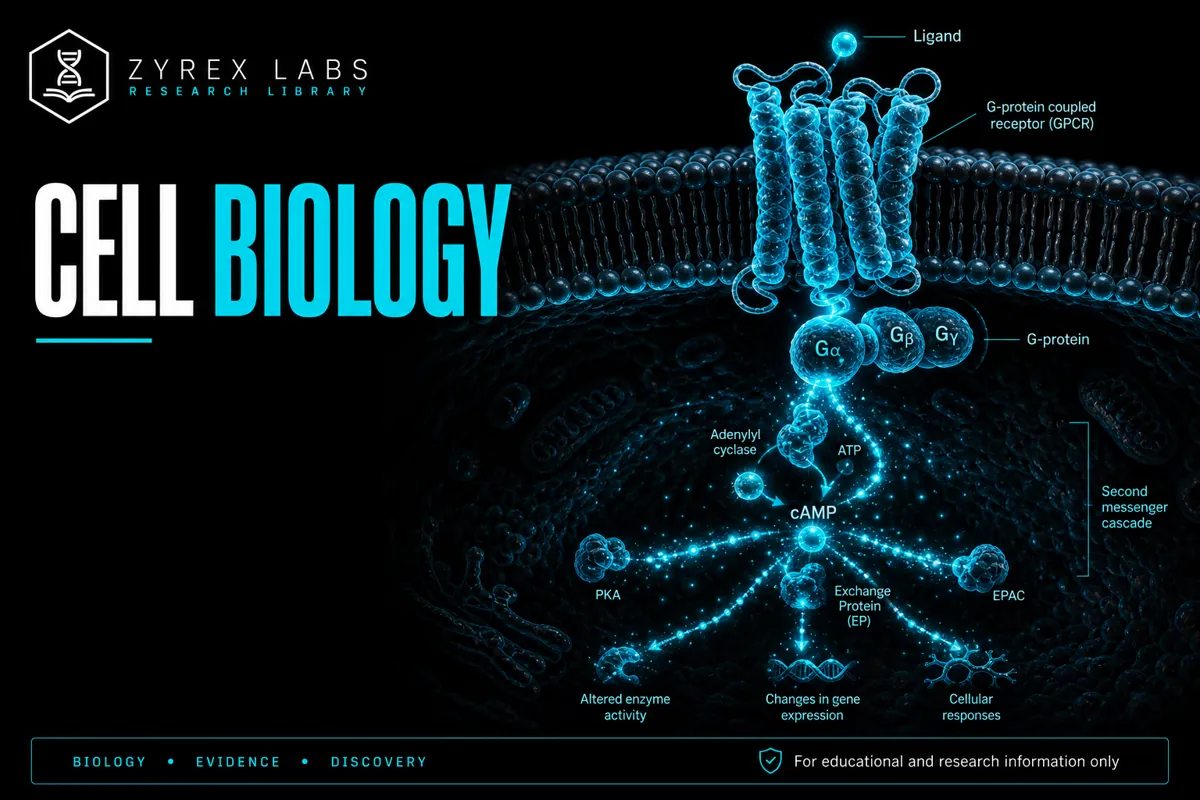
L-Carnitine is central to the carnitine shuttle that moves long-chain fatty acids into the mitochondria.
It is studied within beta-oxidation, the mitochondrial pathway that breaks down fatty acids.
It is a reference molecule in cellular energy and mitochondrial metabolism research.
What is L-Carnitine?
L-Carnitine is a naturally occurring molecule involved in the transport of fatty acids within the cell. It is described extensively in the biochemistry literature as a component of cellular energy metabolism.
It is studied for its role in the carnitine shuttle — a transport system that carries long-chain fatty acids across the mitochondrial membrane.
The carnitine shuttle
Long-chain fatty acids cannot freely cross the inner mitochondrial membrane. The carnitine shuttle attaches fatty acids to carnitine so they can be transported into the mitochondrial matrix.
This transport step is a well-characterised part of how cells make fatty acids available to their energy-producing machinery.
Beta-oxidation and cellular energy
Once inside the mitochondria, long-chain fatty acids enter beta-oxidation, the pathway that breaks them down step by step. This connects L-Carnitine research to mitochondrial metabolism and cellular energy studies.
Because of this link, L-Carnitine is frequently studied alongside other cellular-energy topics such as NAD+ and mitochondrial-derived peptides.
Frequently asked questions
What is the carnitine shuttle?+
It is the transport system that carries long-chain fatty acids into the mitochondria by attaching them to carnitine.
What is beta-oxidation?+
Beta-oxidation is the mitochondrial pathway that breaks down fatty acids. L-Carnitine is studied for its role in delivering fatty acids to this pathway.
For laboratory research use only. Not for human or animal consumption.
Continue learning
MOTS-c
A mitochondrial derived peptide studied within cellular energy regulation, AMPK-associated signalling and metabolic adaptation research.
NAD+
A coenzyme studied within cellular redox biology, mitochondrial metabolism and DNA-repair enzyme research.
Mitochondrial Biology
The mitochondria are the cell's energy centres and a hub of signalling research — connecting MOTS-c, NAD+ and the carnitine shuttle.
Cellular Energy: How Cells Power Themselves
An overview of how cells generate, carry and regulate energy — the topic cluster that connects NAD+, the carnitine shuttle and mitochondrial-derived peptides.
Research categories
Featured guides
Cellular Energy: How Cells Power Themselves
An overview of how cells generate, carry and regulate energy — the topic cluster that connects NAD+, the carnitine shuttle and mitochondrial-derived peptides.
Mitochondrial Biology
The mitochondria are the cell's energy centres and a hub of signalling research — connecting MOTS-c, NAD+ and the carnitine shuttle.