
What Is NAD+?
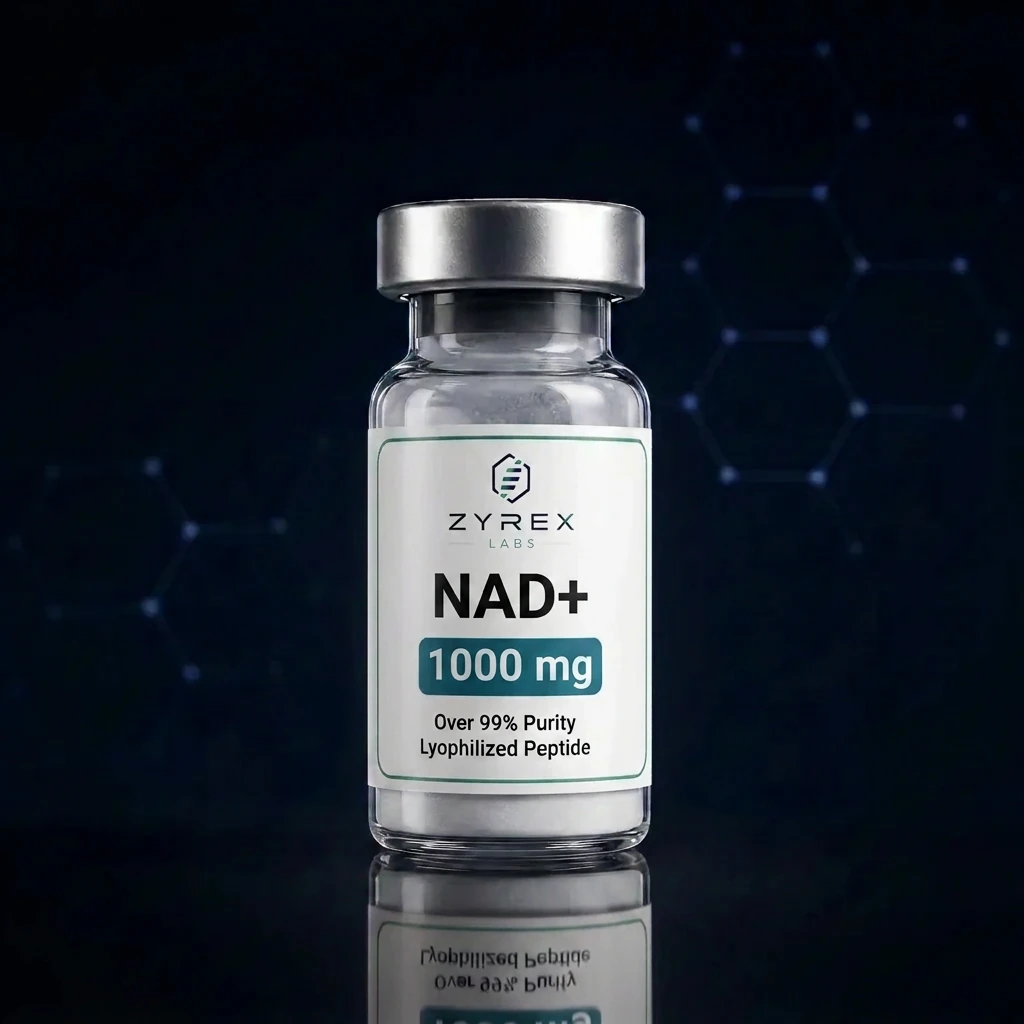
Related Product
NAD+
Research compound · 1000mg
NAD+ (nicotinamide adenine dinucleotide) is a coenzyme found in all living cells. It is described extensively in the scientific literature for its central role in cellular redox biology.
It is studied within cellular energy, mitochondrial metabolism and cellular maintenance research, including its role as a substrate for sirtuins and PARP enzymes.
Research Classification
- Compound Name
- NAD+
- Category
- Cellular Energy
- Research Area
- Redox biology & cellular energy metabolism
- Storage Conditions
- Store at 2–8°C, protected from light
Biological Pathways
- Cellular redox biology — NAD+ cycles between oxidised and reduced forms as a carrier of electrons in metabolism.
- Mitochondrial metabolism — it is central to energy-producing pathways within the mitochondria.
- Sirtuins and PARP enzymes — NAD+ acts as a substrate for these enzyme families, which are studied in DNA repair and cellular maintenance.
Mechanism Of Interest
NAD+ is studied as a coenzyme central to cellular redox biology, cycling between oxidised (NAD+) and reduced (NADH) forms.
Research examines its role in mitochondrial metabolism and the cellular processes that rely on redox coenzyme activity.
Sirtuins are a family of enzymes that use NAD+ as a substrate and are studied in the context of cellular maintenance and ageing research.
PARP enzymes also consume NAD+ and are studied within DNA-repair biology.
Why Researchers Are Interested
- It is a foundational coenzyme referenced throughout cellular biology literature.
- It provides a model for studying redox biology and cellular energy pathways.
- It links several research fields — mitochondrial metabolism, sirtuin biology and DNA repair.
Areas Of Ongoing Research
Storage Information
- Store lyophilised material at 2–8°C, protected from light and moisture.
- Keep reconstituted material refrigerated and handle under standard laboratory conditions.
- Minimise freeze–thaw cycles to preserve compound integrity.
Frequently Asked Questions
What is NAD+?+
NAD+ is nicotinamide adenine dinucleotide, a coenzyme found in all living cells and studied for its central role in cellular redox biology and energy metabolism.
What are sirtuins and PARP enzymes?+
They are enzyme families that use NAD+ as a substrate. Sirtuins are studied in cellular maintenance and PARP enzymes in DNA-repair research.
How is NAD+ stored?+
Lyophilised material is typically stored at 2–8°C, protected from light, with freeze–thaw cycles minimised.
References
NAD+ metabolism, sirtuins and PARP enzymes (review literature)
Peer-reviewed cell biology reviews (PubMed-indexed)
Redox biology and mitochondrial metabolism
Published biochemistry literature
NAD+ chemical records
PubChem public database
References point to reputable, publicly available scientific literature and databases for educational context. They are provided for background reading only.
For laboratory research use only. Not for human or animal consumption.
Related Product
NAD+
Research compound · 1000mg · Research use only